

Top 7 Benefits of Planting a Mini Forest in Your Community

Planting a mini forest—often using the Miyawaki method—is one of the most effective ways to transform small, neglected plots into thriving ecosystems. In just a few years, these dense, native woodlands can boost biodiversity, restore soil health, improve water cycles, and cool overheated cities.
Unlike traditional tree-planting rows, mini forests use dense, multi-layered planting to mimic the structure of a natural forest. This creates fast-growing, self-sustaining ecosystems that provide food and shelter for pollinators, birds, and other wildlife—while also improving life for the people living nearby.
Today, communities, schools, municipalities, and families are turning to mini forests as a solution to climate change, urban heat, and declining biodiversity. From Tokyo to Lisbon, Paris to São Paulo, these pocket forests are proving that small green spaces can create outsized impact.
In this article, we’ll explore the top seven benefits of planting a mini forest in your community—from attracting wildlife and cooling neighborhoods to empowering people and regenerating degraded soils.
What is a Mini Forest?
A mini forest is a small, densely planted grove of mostly native tree and shrub species, designed to replicate the natural layers of a forest. Popularized by Japanese botanist Akira Miyawaki, this method has been adopted worldwide as a quick, effective tool for urban greening, land restoration, and community resilience.


What You’ll Learn
By the end of this article, you’ll discover how mini forests can:
Increase biodiversity and support pollinators
Improve soil health and retain water naturally
Create cooler microclimates in urban and rural areas
Serve as educational and therapeutic green spaces
Strengthen local food security when combined with edible species
Empower communities through co-creation and care
Combat climate change by capturing carbon and regenerating degraded land
At Biggest Mini Forest (BMF), we often add edible species to these ecosystems, transforming them into mini food forests. But in this article, we’ll focus on the general benefits of Miyawaki-style mini forests, so you can apply these principles anywhere—from backyards to public parks.
1 - Boosting Biodiversity and Attracting Wildlife (Mini Forest Benefit #1)

How Mini Forests Boost Biodiversity and Attract Wildlife
One of the most celebrated benefits of planting a mini forest (Miyawaki method) is its ability to dramatically increase local biodiversity in just a few years. While conventional urban tree plantings may include a handful of species, a mini forest often contains 20–40 different native trees, shrubs, herbs, and groundcovers packed into a small plot.
This diversity creates a self-sustaining ecosystem that:
Supports pollinators like bees, butterflies, and beetles, which are essential for food production and crop resilience.
Provides habitat for birds, reptiles, and small mammals, turning once-barren land into thriving sanctuaries.
Encourages natural pest control, as predators like ladybugs, lacewings, and birds return to balance the system.
Increases resilience against disease and climate stress, since diverse species live in healthier environments that those that you find in monocultures.
Why Biodiversity Matters for Communities
Rich biodiversity is not just an environmental win—it has direct benefits for people. For example:
Studies show that areas with high biodiversity can yield up to 20% more fruits and vegetables thanks to improved pollination.
Insects and birds attracted by mini forests can strengthen surrounding gardens, farms, and orchards.
Access to biodiverse green spaces has been linked to better mental health and a stronger sense of community connection.
In this way, mini forests act as bridges between people and nature, showing communities how quickly life can return when conditions are right.
A Real-Life Example
In cities across Europe, Miyawaki forests have been documented to attract over 100 species of insects and birds within just three years. What starts as a bare patch of soil soon transforms into a vibrant mini ecosystem buzzing with life.
At Biggest Mini Forest (BMF), we’ve seen this firsthand: even our 9m² plots quickly become biodiversity hotspots, inspiring participants to plant more and connect with nature in their own backyards.
2 - Improving Soil Health and Water Retention (Mini Forest Benefit #2)
How Mini Forests Regenerate Soil and Improve Water Cycles
Healthy soil is the foundation of every thriving ecosystem—and mini forests are powerful tools for restoring it. When you plant a dense mix of trees, shrubs, and groundcovers, the soil beneath them begins to transform: it becomes richer in organic matter, teeming with microorganisms, and better able to hold water.
This is why mini forests are increasingly used to fight soil degradation, erosion, and drought in both urban and rural areas.
Key Ways Mini Forests Improve Soil Health
Organic matter recycling – Fallen leaves, branches, and plant residues create natural mulch, enriching the soil with carbon and nutrients.
Microbial life boost – Dense root systems feed beneficial fungi and bacteria that build soil fertility and resilience.
Erosion prevention – Tree roots stabilize the ground, reducing soil loss from wind and rain.
Nutrient cycling – Different plant layers work together to pull up minerals from deeper soil, making them available to other species.
💡 Tip: Adding compost, different types of biomass, or forest soil during planting accelerates this process and give your mini forest a strong start.
Water Retention and Flood Reduction
Mini forests don’t just heal soil—they also act like natural sponges.
Increased infiltration: Roots break up compacted soil, allowing rainwater to soak in rather than run off.
Reduced flooding: Studies show that urban Miyawaki forests can cut local flood risk by up to 30% by absorbing stormwater.
Drought resilience: Moisture held in the soil helps trees survive longer dry spells, creating microclimates that protect surrounding plants and crops.
This makes mini forests particularly valuable in climate-stressed regions, where water scarcity and flash floods are becoming more common.
A Practical Example
In Portugal, at the BMF trainings we show to the participants how soil amendments—like compost, mulch, and natural microorganisms—can dramatically improve soil fertility and water retention within a single season. Even small 9m² plots quickly become living laboratories of soil regeneration.
3 - Creating Cooler Microclimates (Mini Forest Benefit #3)
How Mini Forests Cool Cities and Protect Rural Land
One of the biggest challenges in cities today is the urban heat island effect—where asphalt, concrete, and buildings absorb heat, raising local temperatures far above nearby natural areas. This puts stress on people, increases energy costs, and worsens air pollution.
Planting a mini forest (Miyawaki method) is a proven way to create cooler, healthier microclimates in just a few years.
How Mini Forests Reduce Heat
Shade – Dense canopies block direct sunlight, cooling pavements, buildings, and public spaces.
Transpiration – Trees release water vapor into the air, acting as a natural “air conditioner.”
Lower surface temperatures – Studies show that small green patches can reduce local temperatures by 2–4°C compared to concrete areas.
Improved air quality – Trees trap dust and pollutants while refreshing the air with oxygen.
Benefits for Cities and Villages Alike
In urban areas, mini forests make streets, schools, and parks safer and more comfortable during heatwaves.
In rural areas, cooler microclimates protect nearby crops, stabilize soil moisture, and reduce wind stress—improving agricultural resilience.
For communities, these small forests become refuges of shade and comfort, for anyone who passes by.
Real-World Impact
Across Europe and Asia, Miyawaki-style mini forests have been shown to cool surrounding areas within just 3–5 years. What starts as a dense patch of saplings soon becomes a natural shield against extreme heat.
At Biggest Mini Forest (BMF), our projects combine native trees with edible species, creating cooling spaces that also provide food. These small forest patches become more than shade—they turn into a living system that refreshes the land and the community around it.
4 - Educational and Therapeutic Spaces (Mini Forest Benefit #4)
Mini Forests as Living Classrooms and Healing Spaces
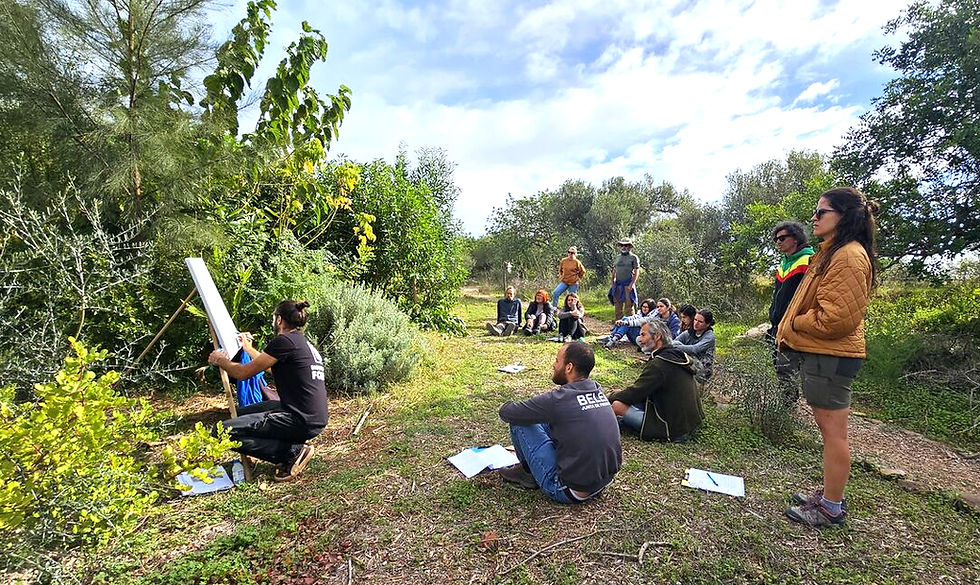
Mini forests don’t just restore ecosystems—they also nurture people. When communities plant and care for a forest together, they create a living classroom and a healing space that benefits all ages.
Learning from Nature
For children: Mini forests are outdoor laboratories. Kids can observe insects, track seasonal changes, and learn ecological cycles in real time—experiences no textbook can match.
For schools: These patches become hands-on teaching tools for science, climate education, and sustainability.
For communities: Neighbors share knowledge while planting and tending their forest, strengthening bonds and spreading environmental awareness.
💡 Many schools in Europe and Asia now include Miyawaki-style mini forests as part of their educational programs, linking biodiversity directly to the curriculum.
Mental Health and Well-Being
Spending time in biodiverse green spaces is proven to:
Reduce stress and anxiety
Boost concentration and creativity
Improve physical health by encouraging time outdoors
Create a sense of belonging through shared care of a living ecosystem
They can become peaceful refuges in dense cities—places where people can pause, breathe, and reconnect with the rhythms of nature.
Real-Life Impact
Those who are part of the Biggest Mini Forest network, often describe planting and taking care of mini forests as therapeutic and transformative experiences. Watching life return to degraded soil, and knowing they helped make it happen, builds both ecological resilience and personal resilience.
As one participant said: “It wasn’t just trees we planted—it was hope.”
5 - Strengthening Food Security (Mini Forest Benefit #5)
How Mini Forests Can Support Local Food Security
Most Miyawaki-style mini forests focus on restoring biodiversity and regenerating soil. But there’s another powerful possibility: adding edible plants to these ecosystems, transforming them into mini food forests.
By blending fruit trees, berry shrubs, herbs, vegetables and annual plants into a forest design, communities can create small but productive ecosystems that feed both people and wildlife.
The Benefits of Edible Mini Forests
Fresh, local produce: Even a small patch can provide herbs, berries, and seasonal crops.
Resilient food systems: Diverse planting makes food production less vulnerable to pests, drought, or supply chain disruptions.
Healthier diets: Access to fresh, chemical-free foods encourages better eating habits.
Food sovereignty: Communities gain independence from industrial food systems while reviving traditional knowledge.
💡 These forests don’t just grow food—they grow resilience, culture, and community pride.
Mini Forests as Crisis Buffers
When global challenges such as climate stress, economic disruption, or supply shortages arise, having food-producing green spaces nearby gives communities a safety net. Edible mini forests function as living pantries—regenerating land while also providing nourishment.
The BMF Example
At Biggest Mini Forest (BMF), we often integrate edible layers into mini forest designs. Our 3×3 meter model combines native trees with food-producing species, so every patch not only restores biodiversity but also produces abundance.
This approach shows that restoration and food security can go hand in hand, inspiring communities to see mini forests as more than green patches—they are ecosystems of care and nourishment.
6 - Community Empowerment and Resilience (Mini Forest Benefit #6)
Mini Forests as Catalysts for Community Action
Planting a mini forest is never just about trees—it’s about people. When neighbors, schools, and organizations come together to plant, they create shared ownership and a collective mission of regeneration.
The process of designing, digging, and planting side by side transforms a patch of land into more than greenery: it becomes a community project that builds pride, trust, and resilience.
Social Benefits of Planting Mini Forests
Strengthening bonds: Planting days bring together people of all ages, backgrounds, and skills.
Shared responsibility: Communities become long-term stewards of the forest, ensuring its survival during the first years until it becomes a more resilient system.
Local leadership: Children, teachers, and local leaders often emerge as champions of green initiatives.
Sense of belonging: Mini forests provide a visible reminder of what collective action can achieve.
Resilience Beyond Ecology
While mini forests help ecosystems withstand droughts and floods, they also help people face challenges together. Communities that co-create green spaces are:
More likely to collaborate on other sustainability initiatives
Better prepared to adapt to environmental and social changes
Stronger in times of crisis, thanks to trust and cooperation
💡 Resilience is not only ecological—it is social. Mini forests nurture both.
Real-Life Inspiration
At Biggest Mini Forest (BMF), we’ve witnessed communities transform through this process: what begins as a simple planting often evolves into a network of green stewards, inspiring others to act.
7 - Combating Climate Change and Regenerating Degraded Land (Mini Forest Benefit #7)
Mini Forests as Local Solutions to a Global Crisis
Though they may be small in size, mini forests punch far above their weight in the fight against climate change. By planting densely and diversely, they grow up to 10 times faster than conventional tree plantations, which means they capture carbon and regenerate land much more quickly.
Climate Benefits of Mini Forests
Carbon capture: Trees absorb and store carbon dioxide, one of the main drivers of global warming.
Cooling effect: By reducing the urban heat island effect, they lower energy demand for cooling.
Stormwater absorption: Mini forests reduce flood risk by soaking up heavy rainfall.
Extreme weather resilience: Dense root systems and layered canopies protect soils and ecosystems from droughts, storms, and erosion.
Restoring Degraded Land
Mini forests are also powerful tools for land restoration:
Urban wastelands: Abandoned lots and roadside verges can quickly become green havens.
Degraded farmland: Mini forests rebuild soil fertility, bringing life back to exhausted fields.
Drylands: With proper soil preparation and mulching, they help combat desertification by improving water retention.
💡 Even the smallest patches can spark ecological recovery, proving that regeneration is possible anywhere.
Local Action, Global Impact
From India to Europe, Miyawaki forests have been shown to restore biodiversity and sequester significant amounts of carbon in less than a decade. Each mini forest becomes part of a much larger network of climate action.
At Biggest Mini Forest (BMF), we believe climate solutions must also bring abundance. That’s why our approach integrates food production alongside restoration—turning every patch into a source of both ecological renewal and human resilience.
Conclusion: Small Forests, Big Impact
From boosting biodiversity and healing soils to empowering communities and tackling climate change, mini forests show that small green spaces can drive big transformations. They are not just clusters of trees—they are living classrooms, natural air conditioners, food gardens, and climate solutions rolled into one.
What makes them powerful is their simplicity and scalability: anyone—schools, families, municipalities, or local groups—can start with just a few square meters. And as more patches appear, they connect into networks of resilience and abundance.
Whether your goal is to cool your neighborhood, restore degraded land, or teach the next generation about nature, a mini forest is a solution you can plant today.
Ready to learn more?
Join our Next Mini Food Forest Training
Check more info on Biggest Mini Forest website
Further reading (studies, articles, and practical)
• Miyawaki, A. (1999). Creative Ecology: Restoration of Native Forests by Native Trees
Plant Biotechnology, 16(1), 15–25.
• Miyawaki, A. (2004). Restoration of living environment based on vegetation ecology Ecological Research, 19(1), 83–90.
• Earthwatch Europe. (2025). Tiny Forest Monitoring Report 2024 (Cooling, infiltration/soil compaction, carbon, social benefits).
• Wageningen Environmental Research (WUR). Ottburg, F. et al. (2022). Tiny Forests: groene mini-oases in de stad – Monitoring van biodiversiteit in 11 Tiny Forests (2018–2021)
• Aram, F., García, E. H., Solgi, E., & Mansournia, S. (2019). Urban green space cooling effect in cities: A review Urban Forestry & Urban Greening, 41, 127–139.
• Li, H., et al. (2024). Cooling efficacy of trees across cities is determined by background climate, urban morphology, and tree trait
Communications Earth & Environment, 5, 92.
• U.S. EPA. (2015). Stormwater to Street Trees: Engineering Urban Forests for Stormwater Management
• USDA Forest Service. (2024). Interactions between management context and tree water use in urban forests (Research note on trees, infiltration/ET, and flood-mitigation pathways.)
• Egerer, M. (2023). Designing “Tiny Forests” as a lesson for transdisciplinary urban ecology education Urban Forestry & Urban Greening, 81, 127802.
• WHO Regional Office for Europe. (2021). Green and Blue Spaces and Mental Health: New Evidence and Policy Implications
• Zhang, Y., et al. (2024). Green spaces exposure and the risk of common psychiatric disorders: A systematic review
Environmental Research, 247, 118134.
• Albrecht, S., & Wiek, A. (2021). Food forests: Their services and sustainability
Journal of Agriculture, Food Systems, and Community Development, 10(4).
• NCAT/ATTRA. Favor, K. (2023). Urban Agroforestry (Overview of food-producing urban tree systems and community benefits.)
• UNESCO. (2023). Tiny Forest (Summary of WUR-documented Tiny Forest outcomes: biodiversity, cooling, water retention, CO₂ estimates.)
Practical projects & community action
• Earthwatch Europe. Tiny Forest – Program Overview
• Earthwatch Europe. Tiny Forest – Resources (monitoring guides, activities)
• IVN Natuureducatie. Tiny Forest – Resources (Handbook & downloads)
• SUGi Project. Support Sustainable Biodiverse Forests with SUGi
• Afforestt. Afforestt – Creating Native Forests


Comments